
If a house is located near a road, the facade often “ages” faster not because of the sun, but because of dust and dirt. The lower part of the wall catches splashes after rain, traces from wheels, sand, and sometimes even salt or road chemicals. That is why, in a “dusty” zone, the finish should be chosen not by the principle of “the most beautiful color,” but by the principle of the most practical appearance in real life.
Below are simple rules: which shades work better, which texture helps most, and how to keep the lower part of the facade neat for a long time.
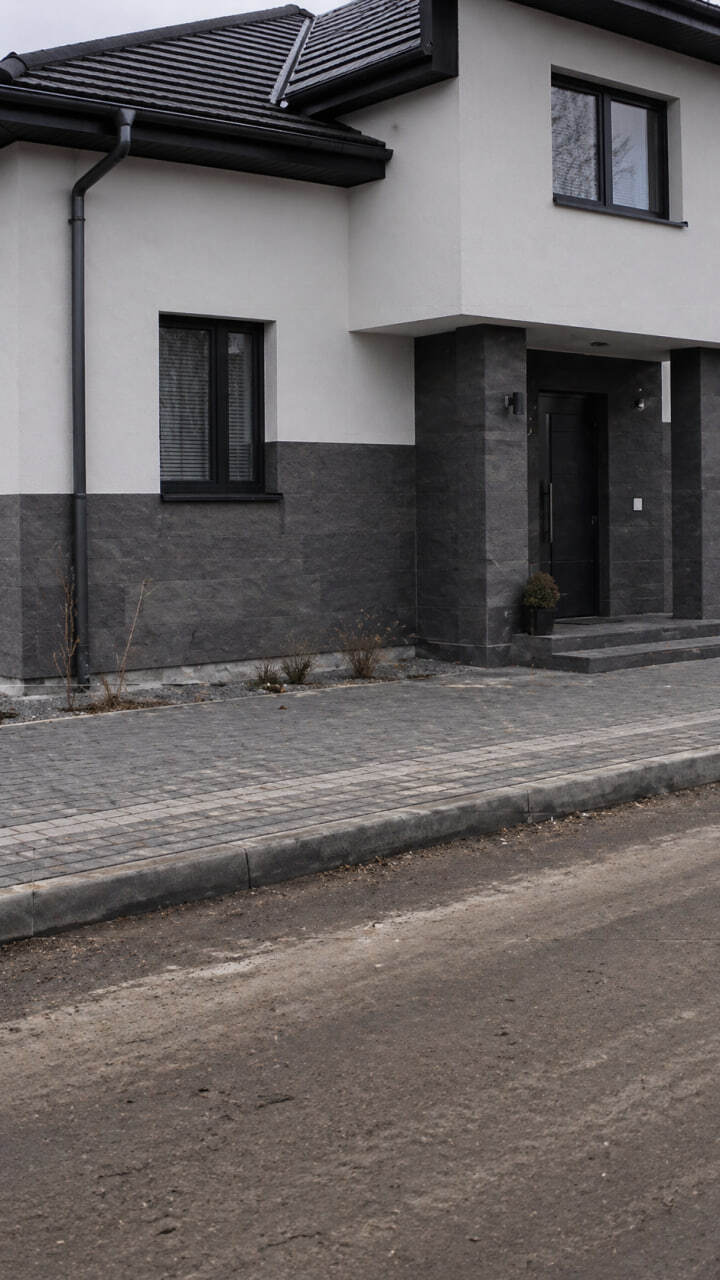
Why the Lower Part of the Facade Gets Dirty Faster
The lower part of the wall receives the greatest load:
- road dust settles constantly
- water splashes lift dirt above the plinth
- in winter, salt and road chemicals are added
- mechanical contact occurs more often — shovels, bicycles, bags, strollers
That is why the “dusty zone” is usually not the entire wall, but the first 40–80 cm, and sometimes more if there is parking nearby.
Practical Shades: What Hides Dirt Best
Medium tones work best
The most practical colors are not pure white or black, but intermediate shades:
- warm gray
- gray-beige
- sandy tones
- natural stone shades
They make the following less visible:
- dust
- rain streaks
- small scratches and everyday marks
Be careful with pure white
White looks expensive, but near a road it quickly starts to look tired: dust and streaks are much more noticeable.
Be careful with very dark shades — graphite or black
A dark lower facade looks beautiful, but light dust and marks are visible on it, especially in summer. If you want a darker shade, it is better to choose a texture that visually breaks up the surface and masks traces.
Texture: Why Relief Is Often More Practical Than a Smooth Wall
A smooth surface shows every streak and mark. A textured surface works differently:
- it visually breaks up dirt
- it hides small marks
- it makes natural aging look more even
That is why, in a dusty zone, it is better to choose an expressive stone-like texture instead of a flat, smooth layer.
How to Design the Lower Facade / Plinth in a Dusty Zone
The most effective scheme is:
- the lower part of the facade is darker and more textured
- the upper part is lighter and calmer
- the transition is made along a clear, intentional line — not “where it happened”
This way, the lower part takes on the dirt load, while the main facade surface remains visually clean.
Maintenance: How to Make the Facade Easy to Care For
Near a road, the facade will need occasional washing. That is why it is important that the finish:
- withstands regular cleaning
- does not require overly delicate maintenance
- preserves its appearance after washing
The practical nature and ease of maintenance of your finish are especially important here — for a dusty zone, this is one of the key criteria.
What to Do If the House Is Also Insulated
If the facade is installed over insulation, the lower part must be designed especially carefully: there is more moisture, more splashes, and more stress in this area, so any mistakes become visible faster. That is why Facade insulation should be planned together with the plinth solution and protection of the lower facade — this reduces risks and helps avoid “repairs after one season.”
Why “Stone” Is Often the Best Choice for Areas Near the Road
A dusty zone needs a combination of three things: texture, a practical color, and easy cleaning. That is why KORDEKO flexible tile (PletaFlex) is often chosen as both a protective and decorative layer: it provides a stone-like texture, works well for the lower facade, and helps maintain a neat appearance in conditions of dust and rain splashes.
Conclusion
To keep a facade near the road looking neat, three things are enough:
- practical medium shades
- a texture that masks dust and streaks
- a properly designed lower facade / plinth as a protective zone
This way, the house will look clean and premium not only in photos, but also in everyday real life.
KORDEKO Contacts
📱 Phone: +37368140333
🌐 Website: www.kordeko.com
📧 Email: kordeko.md@gmail.com