A fireplace or stove is always about atmosphere, but it is also about temperature. In this area, it is important not only for it to look beautiful, but also for it to be done properly: where cladding can be used, how to prepare the substrate, and what to pay attention to so the finish is practical and lasts a long time.
Below is a clear guide showing where flexible tile is appropriate and where it is better to choose other solutions.
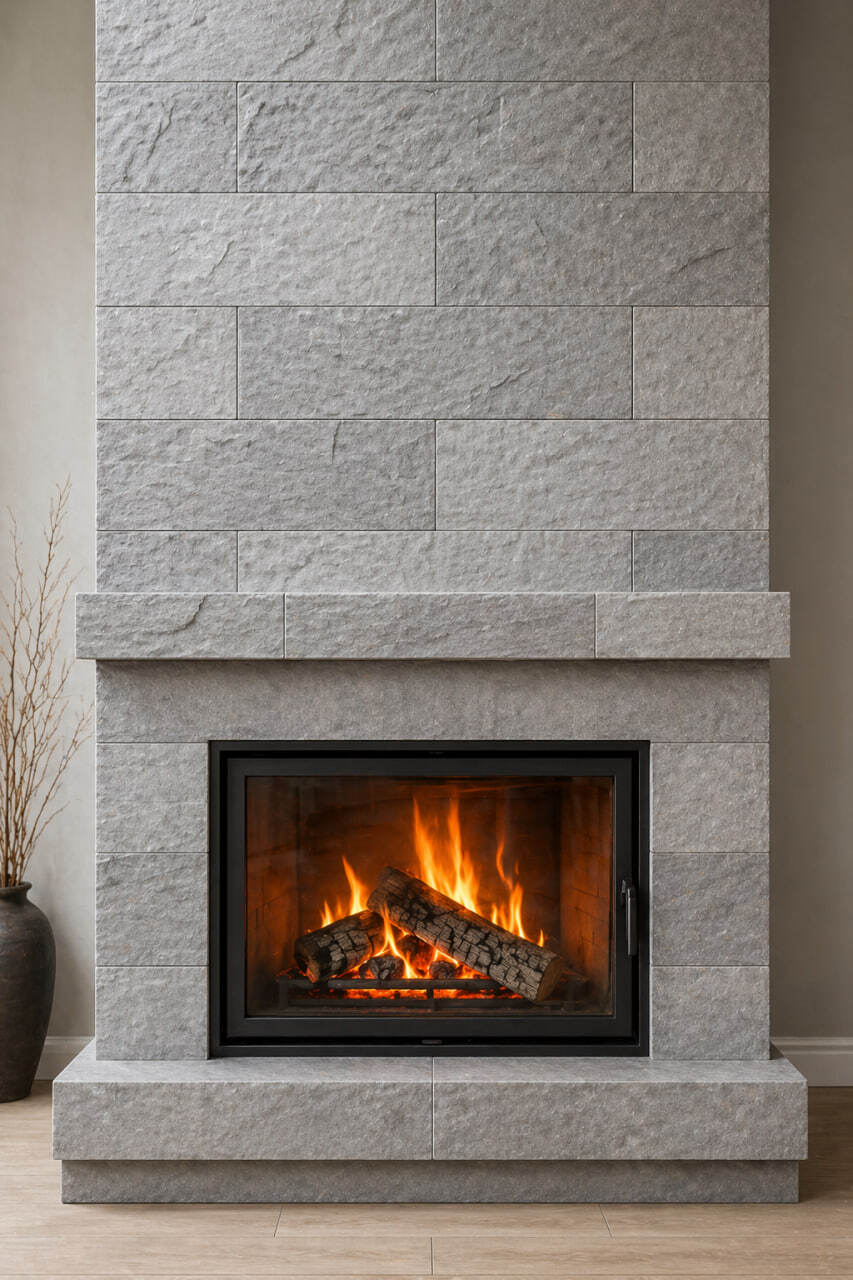
First, the main point: a fireplace has different heat zones
A fireplace/stove can generally be divided into 3 zones:
- hot zone — around the firebox, where direct heat is at its highest
- warm zone — nearby, where the wall heats up, but without extreme temperatures
- decorative zone — the fireplace portal, wall sections, adjacent TV wall, where heat exposure is minimal
This is exactly what determines where cladding can be used and where it cannot.
Where flexible tile works best
1) Fireplace portal (the outer decorative part)
This is the most popular area: the cladding creates a “stone” look, adds depth, and works beautifully with lighting.
2) Wall behind the fireplace (if there is no direct overheating)
If the structure is designed in such a way that the wall is not exposed to extreme heat, it is possible to create an accent wall that visually unites the fireplace and the interior.
3) Niches, wall sections, and areas next to the fireplace
Cladding around the fireplace is often used as part of the overall living room composition — it is practical and creates a cohesive look.
For these types of projects, KORDEKO Flexible Tile (PletaFlex) is usually chosen because it provides the texture of stone while also being easy to maintain and convenient to install on detailed surfaces.
Where it is better not to take risks
There are areas where the solution must strictly follow fire safety rules and the temperature requirements of the specific fireplace or stove:
- the immediate area around the firebox
- sections where постоянный сильный перегрев may occur
- places where the material will be exposed to direct heat above the allowable limit
In these cases, it is better to rely on the fireplace/stove паспорт and the manufacturer’s recommendations regarding facing materials.
Substrate preparation: more important than the material itself
For the cladding to hold properly and look neat, the substrate must be:
- even
- solid
- clean
- properly primed
This is the basic logic of installation: if the substrate is weak or dusty, even a good material can be ruined. In your installation recommendations, preparation and priming are mandatory steps.
Practicality: why the fireplace area should be easy to clean
Near a fireplace, the following often appear:
- dust
- hand marks
- soot in the service area (especially if the fireplace is used actively)
That is why the cladding must be practical: it should be easy to wipe clean without worrying about constant maintenance. According to your product characteristics, the emphasis is placed precisely on ease of care.
A small design tip (to make it look “expensive”)
- create one accent plane instead of covering everything
- use warm lighting: the texture will look deeper
- less décor is better, but the composition should feel complete
- if there is a TV nearby, choose a calm texture so it does not distract
What does facade insulation have to do with it?
If the fireplace is placed against an exterior wall, sometimes the room feels cold because of the wall itself, not because of the design. In such cases, people want to “cover” the wall with decorative cladding, but the real cause remains.
In these situations, Facade Insulation helps make the exterior wall warmer and reduces the risk of condensation inside. Then the interior finish can work purely as aesthetics and comfort.
Conclusion
Flexible tile is appropriate in fireplace interiors where the heat is moderate and the area is mainly decorative: the portal, accent wall, wall sections, and niches. The main thing is to prepare the substrate correctly and not to use the material in areas of extreme heat without confirmation of the allowable temperature limits.
KORDEKO Contacts
📱 Phone: +37368140333
🌐 Website: www.kordeko.com
📧 Email: kordeko.md@gmail.com