
A facade often looks “normal” on the day of handover, but problems may appear later: cracks on corners, stains, peeling at joints. To avoid paying twice, it is better to inspect the work using a short checklist — not as a builder, but as a client who knows which questions to ask.
Below are 12 points that really help detect typical installation mistakes before the team leaves the site.
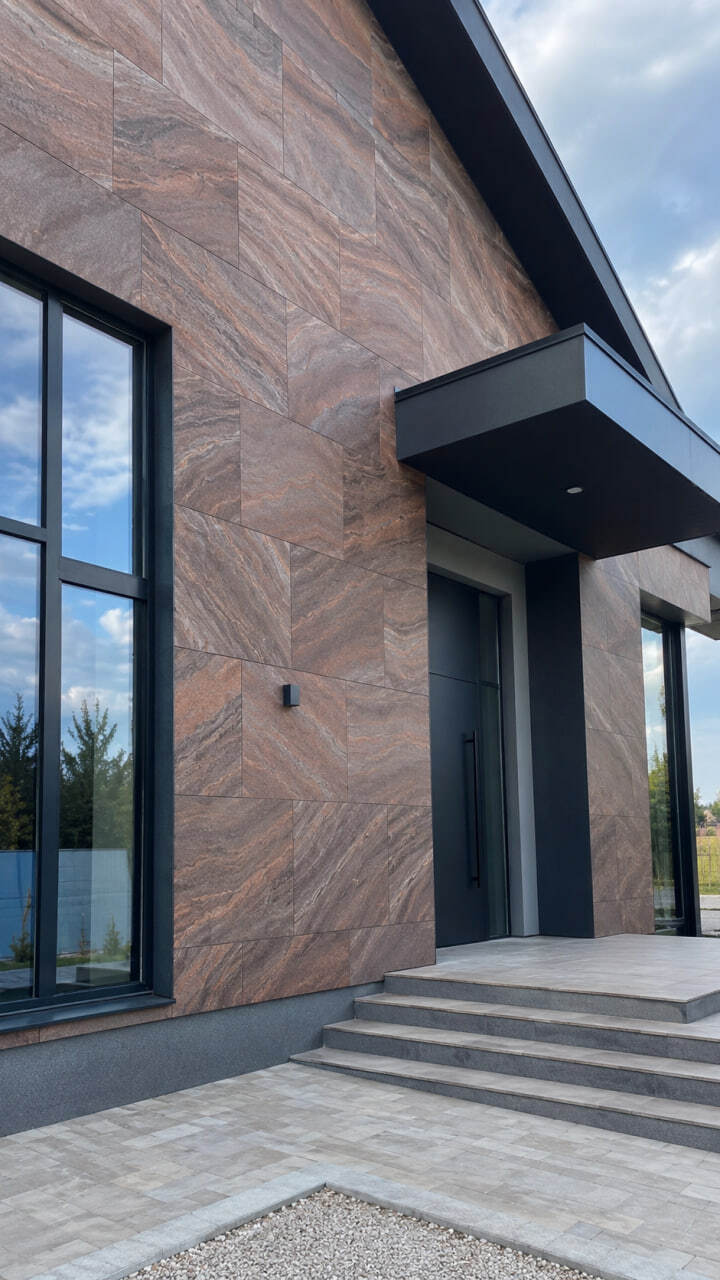
1) Base and surface preparation: check for “soft” areas
Tap the facade in several places. A dull, hollow sound or signs of separation are warning signs.
2) Primer: was it applied and where is the result visible?
Ask what primer was used and when it was applied. Areas without primer are more likely to develop weak zones and peeling.
3) Plane geometry: check for waves
Look along the wall from the side. Waves and uneven areas are especially visible on long surfaces and around windows.
4) Corners: check whether the lines and edges are straight
Inspect the external corners. They should be straight, without steps, distortions, or leaning edges.
5) Windows and slopes: check for cracks from the start
Carefully inspect the corners of openings and window slopes. These are high-risk areas: if microcracks are already visible, they may become worse later.
6) Joints and seams: check whether the width and rhythm are consistent
The joint should not vary randomly. If the width is uneven, the facade looks cheaper and water is more likely to enter weak areas.
7) Connections to drip edges and windowsills: check water protection
Make sure water drains outward and does not go under the finish. If there is a shelf-like area or a gap somewhere, it may cause future stains.
8) Plinth and lower facade area: check practical protection
The lower part should be neat and resistant to dirt and splashes. If the base is finished “just like the wall,” it may quickly become a problem.
9) Cornices, canopies, and projections: check for drip edges and water drainage logic
Water protection is especially important on projecting elements. If water remains there or runs down the wall, the facade will wear out faster.
10) Surface cleanliness: check for glue stains and messy cuts
Look at the facade in different lighting. Glue marks, stains, and dirty joints should be removed immediately before the project is accepted.
11) Documents and leftover materials: what should be handed over to you
Ask for:
- the adhesive used, including the product name;
- the primer used;
- a short diagram of the facade details and junctions;
- leftover material for future repairs.
12) Warranty: what exactly it covers
Important: the warranty should cover the facade as a complete system, not just “what was glued.” This is especially critical when there is Facade Insulation — junctions and reinforcement must be part of the contractor’s responsibility.
Why it is important to accept the details, not just the “picture”
90% of problems start in the details: corners, slopes, junctions, and the lower facade area. That is why acceptance means checking the details and geometry, not just taking a “before/after” photo.
And when the final finish is made with a practical material that is convenient for detailed areas, the risk of defects is lower. That is why KORDEKO Flexible Tile (PletaFlex) is often chosen for facades as a solution that provides a neat appearance and a clear installation technology when the base is prepared correctly.
Conclusion
This checklist helps you accept the facade calmly: identify weak spots before handover and fix the quality standard while the installation team is still on site. It is better to spend 30 minutes checking the work than to spend money on repairs later.
KORDEKO Contacts
📱 Phone: +37368140333
🌐 Website: www.kordeko.com
📧 Email: kordeko.md@gmail.com