
A facade corner is the place where the quality of installation is immediately visible. If the edge is uneven, the joint “wanders,” and the line looks random, the facade loses its premium appearance even when the material itself is good. That is why a neat external corner is not a minor detail, but one of the signs of professional finishing.
Below is how to make clean corners without rough metal trims, so the facade looks complete and modern.
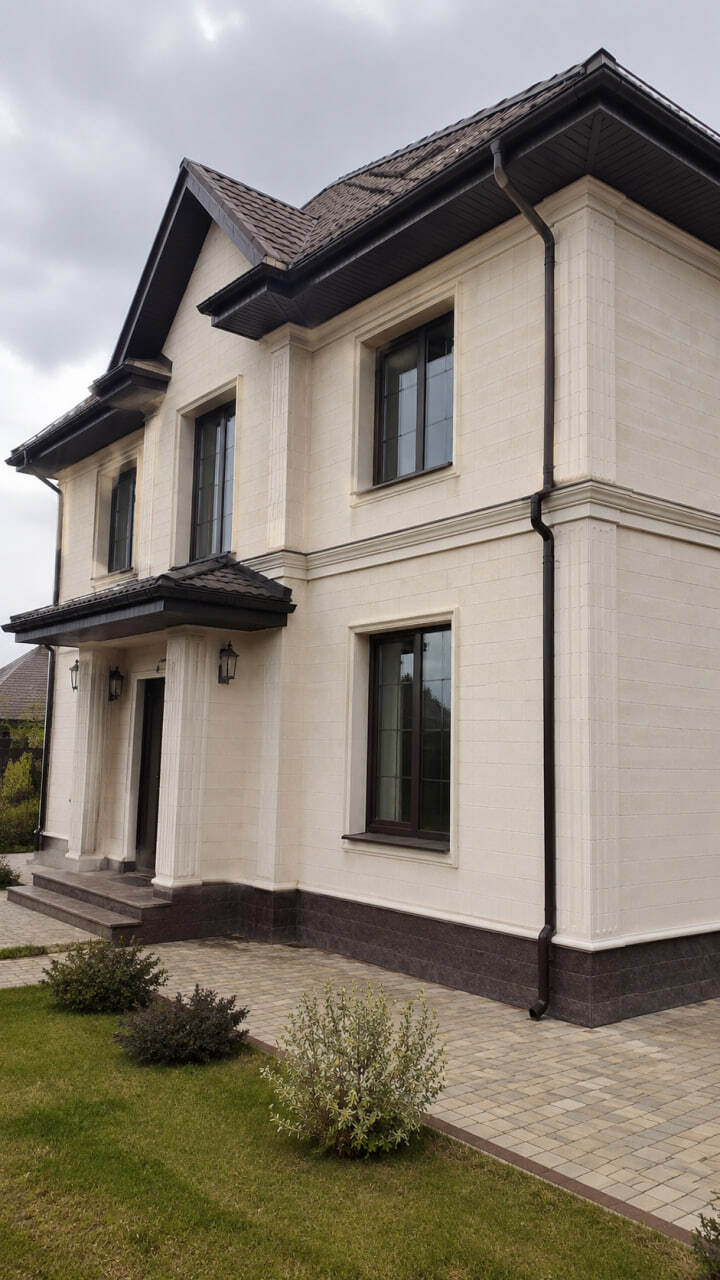
Why a Metal Corner Does Not Always Look Beautiful
Metal elements can be technically useful, but visually they do not always fit. Common problems include:
- the corner looks “foreign” against the stone texture
- the metal may stand out in color
- dirt can appear at the joints over time
- the facade loses the feeling of a single, continuous material
If the goal is to achieve a neat “stone” look, it is better to aim for an edge that looks like part of the cladding itself.
What a “Clean Corner” Means on a Facade
A clean corner means that:
- the line is strictly vertical
- there are no steps or sharp level differences
- the joint is even along the entire height
- the cut looks neat
- the corner does not look like a separate trim piece
These are the details that make a facade look visually more expensive.
The Main Rule: Prepare the Corner Before Installation, Not After
If the base is uneven, the finish will not fix it. Before installation, it is important to check:
- the vertical line of the corner
- the strength of the base
- the evenness of the two adjacent planes
- the absence of dust and weak areas
If the corner is uneven, it is better to level it locally in advance. Otherwise, the edge will repeat the wall defects.
How to Make a Neat Edge Without Metal
1) Set the Vertical Line
First, mark a control line. Installation is carried out according to this line so that the corner does not start to “snake.”
2) Plan the Layout in Advance
You should not approach the corner with random cuts. It is better to calculate in advance how the elements will meet on both planes.
3) Avoid Thin Strips
Narrow cut pieces on the very edge look bad and are more easily damaged. It is better to shift the layout so that the edge elements have a normal width.
4) Keep the Adhesive Thickness Even
If there is more adhesive on one side than on the other, a step will appear. That is why the layer must be stable, and the base must be properly prepared.
Why Flexible Tile Is Convenient for Corners
On external corners, not only strength matters, but also workability. The material should allow clean work with edges, cuts, and joints.
For such tasks, KORDEKO Flexible Tile (PletaFlex) works well because it helps finish corners without the feeling of a heavy trim and keeps the facade looking complete.
If the Facade Has Insulation, the Corner Must Be Reinforced Correctly
On an insulated facade, the external corner is a risk zone. Cracks often appear there if reinforcement and transitions are done incorrectly. That is why facade insulation must be treated as a system: mesh, corner reinforcement, the right adhesive, and neat final cladding must all work together.
Common Mistakes
- starting installation without vertical marking
- trying to hide an uneven corner with the finish
- leaving thin cut strips on the edge
- applying different adhesive thicknesses on the two sides
- using a trim that does not match the facade texture
Mini Checklist for a Neat Corner
- the corner has been checked vertically
- the base is strong and primed
- the layout has been calculated in advance
- there are no thin strips on the edge
- the joint is even along the entire height
- the edge looks like part of the facade, not a separate insert
Conclusion
A clean corner without metal is the result of proper preparation, marking, and accurate cutting. If the edge is made straight and continuous, the facade immediately looks more expensive and professional.
KORDEKO Contacts
📱 Phone: +37368140333
🌐 Website: www.kordeko.com
📧 Email: kordeko.md@gmail.com