A facade is not just “insulation + something nice on top.” It’s a system, and everything depends on the details: joints, corners, connections, cornices, window reveals, and the plinth/base. Most facade problems happen not because of the material, but because different parts of the job were done by different people — with no shared responsibility and no single technical logic.
That’s why a “turnkey facade” often ends up being more cost-effective than assembling the facade in pieces: insulation by one crew, cornices by another, and cladding by a third.
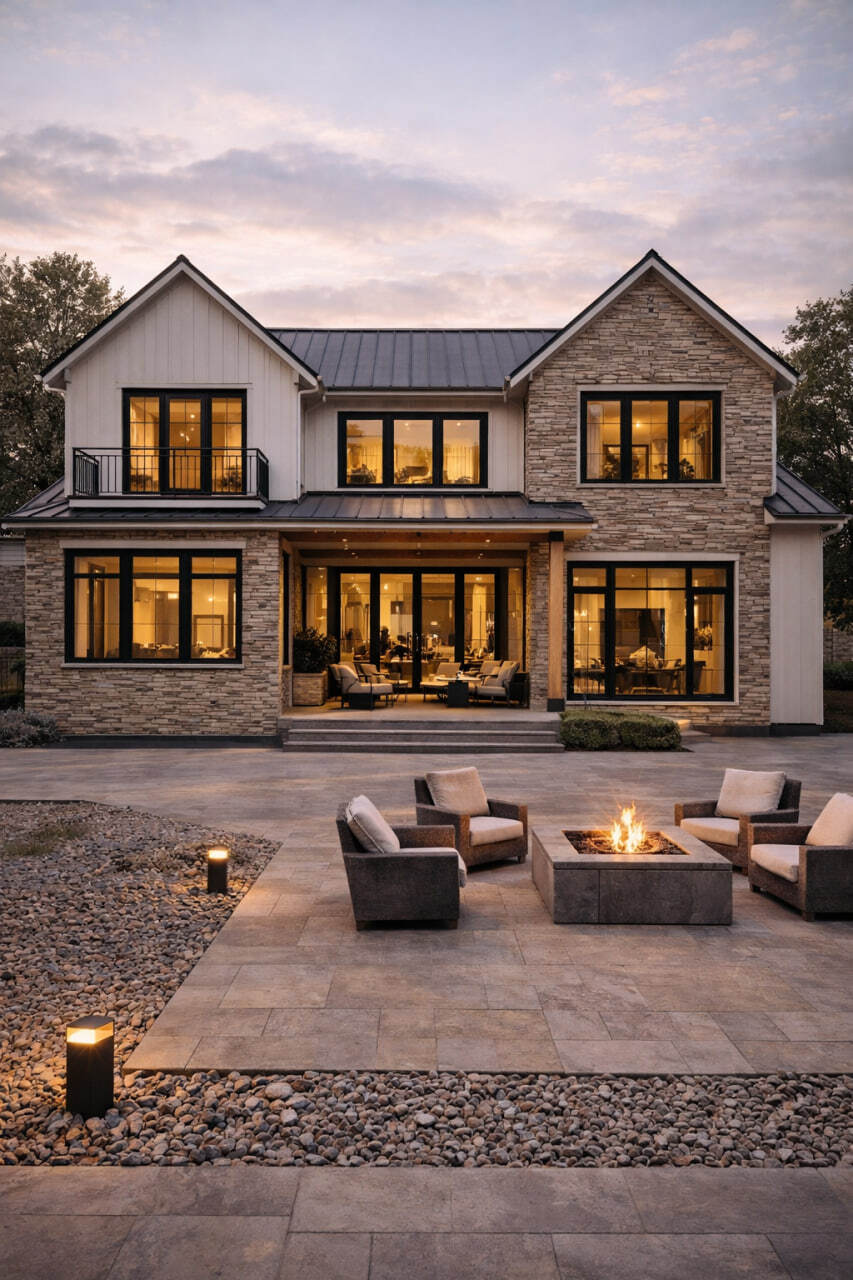
Why facades usually “fail” at the joints
When different teams work on a facade, each one is responsible only for their own section. As a result, typical gaps appear:
- the insulation is done “by the book,” but the details for cladding were never planned
- cornices are installed, but the critical areas aren’t properly reinforced
- cladding is applied, but there’s no correct transition where materials meet
- one contractor assumes “the next guy will handle it,” and the next guy doesn’t see the right base
Joints become the place where all mistakes collect: different geometry, different adhesives, different layer thicknesses, and different ideas of “how it should be done.”
What a turnkey facade gives you in practice
1) Fewer mistakes — one continuous workflow
When one team is responsible for the entire system, they plan the facade as a complete solution from the start:
- where mesh reinforcement is needed
- how to handle corners and window reveals
- how to install cornices without cracks
- how to prepare the base for cladding
This dramatically reduces “on-the-spot” improvisation.
2) One responsibility — no blame-shifting
The worst scenario is a crack or delamination, and everyone says “not us”:
- the insulation crew blames the cladding
- the cladding crew blames the cornices
- the cornice crew blames the substrate
With a turnkey facade, responsibility is unified: you don’t have to hunt for who’s guilty — you fix the cause.
3) One material system — fewer compatibility issues
A hidden problem with “assembled” facades is layer incompatibility:
- primer not suited to the adhesive
- reinforcement layer not designed for the finish
- adhesive thickness varies
- different materials behave differently with temperature and moisture
In a turnkey approach, materials and technology are selected as one system — not as a “collection of separate decisions.”
When turnkey is especially выгодно
If the facade is complex
The more details, the more joints. Turnkey becomes выгодно if you have:
- cornices, moldings, rustications
- сложные corners, bay windows, columns
- many windows and junctions
- transitions between materials and planes
If you want durability without постоянных repairs
A facade is an expensive part of a house, and rework is always painful.
When Facade insulation is done properly and the right details are built in from the start, it pays off because the facade lasts longer and doesn’t require constant вмешательство.
If you want “one style” without visual compromises
When cornices, texture, and finishing are done by one team, the facade looks cohesive: consistent lines, clean joints, correct geometry, and a unified layout logic.
Why it also makes sense to include the cladding in the package
The finish is what people see — but it also protects the entire system.
That’s why the cladding material must be chosen and installed with full understanding of facade loads and detailing.
In a package approach, it makes sense to use a solution that works well on complex areas, doesn’t overload the system, and adapts to minor движения. That’s why turnkey facades often choose KORDEKO flexible tile (PletaFlex) as the finishing layer over insulation: it’s lightweight, practical, and easy to work with on cornices, corners, and window reveals.
Three questions to ask before ordering a facade “in parts”
- Who is responsible for joints and transitions (cornice–wall–cladding)?
- Who provides a warranty for the entire facade, not just “their part”?
- Is there one unified technology and materials list for the whole system?
If there are no clear answers — turnkey is almost always the better value.
Conclusion
A turnkey facade is advantageous not because it’s “more expensive and premium,” but because:
- fewer mistakes at joints
- one responsibility
- one system of materials and technology
- a cohesive look and less rework
And over time, that usually means one thing: the facade lasts longer and stays trouble-free — without cracks, surprises, and постоянных patch-ups.
KORDEKO Contacts
📱 Phone: +37368140333
🌐 Website: www.kordeko.com
📧 Email: kordeko.md@gmail.com