When someone first hears “flexible stone,” the same set of questions usually comes up: what is it made of, where can it be used, how long does it last, how do you maintain it, and why does it cost what it does? Below is a short FAQ without fluff, so you can understand it quickly.
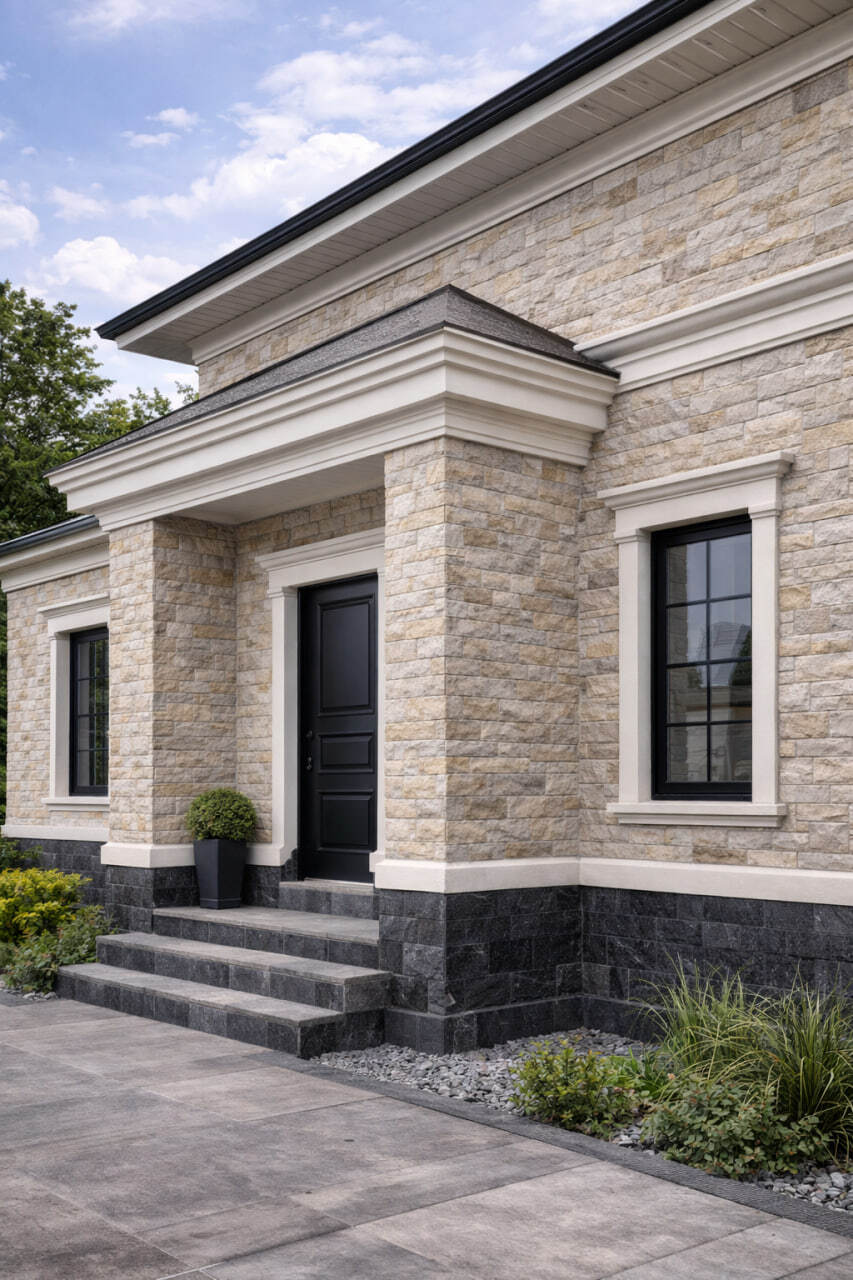
1) What is flexible tile and how is it different from regular tile?
It is a cladding material with a stone or brick texture, designed for finishing walls and façades. People choose it when they want a natural “stone-like” look without heavy and complicated solutions.
2) Can it be used outdoors, on a façade?
Yes, but the technology matters. A façade is a system, and the final result depends on surface preparation, primer, adhesive, and installation conditions.
3) Can it also be used inside the house? For example, in a living room or on an accent wall?
Yes. In interiors, flexible tile is often used for accent walls, fireplaces, and TV zones because the texture instantly makes the space look more premium, while maintenance remains simple.
4) How durable is it? Will it crack?
Cracks usually appear because of an improper base and poorly executed details such as corners, reveals, and junctions. If everything is done according to the technology, the façade performs reliably and predictably.
5) Is it difficult to install? Are special tools required?
The installation process is straightforward, but discipline is important: preparation, primer, the right adhesive, and proper conditions. According to your installation recommendations, the key stages are about the base, not about any “secret tool.”
6) What should it be glued with and how do you choose the adhesive?
You need an adhesive suitable for interior or exterior use depending on the substrate type and operating conditions. For façades, a frost-resistant adhesive is required. The adhesive color (white or gray) is selected depending on the task and the tile shade.
7) Can it be installed over façade insulation?
Yes, but only if the surface is properly prepared: a level reinforced base coat, suitable primer, and full compliance with the installation technology. That is why Facade insulation is best done as one complete system together with the finish, instead of “first we insulate, then we decide later.”
8) How do you maintain it? Is it difficult to clean?
Maintenance should be simple: regular cleaning without constant “renewals.” In your comparison materials, the emphasis is exactly on practicality and ease of care.
9) Why can the price differ from ordinary finishing materials?
Because you should compare not only the “material price per m²,” but the whole result: preparation, installation, details, service life, and maintenance. A cheap solution can become expensive after repairs and rework just a few seasons later.
10) Where should I start if I want to understand whether it is suitable for my house?
Start with the basics: is it for a façade or an interior, is there insulation, are there any complex areas such as the plinth, cornices, or reveals, and what is the total area? After that, it becomes much easier to choose the right technology and solution. For a clean final finish and neat detailing, many customers choose KORDEKO Flexible Tile (PletaFlex).
KORDEKO Contacts
📱 Phone: +37368140333
🌐 Website: www.kordeko.com
📧 Email: kordeko.md@gmail.com