
The plinth is the most vulnerable area of a facade. This is where thermal bridges, freezing, condensation, and damage to finishing materials most often occur. A poorly designed plinth can completely negate the effect of insulating the entire house. In this article, we explain why plinth insulation and cladding are critically important and how to properly protect the lower part of the facade.
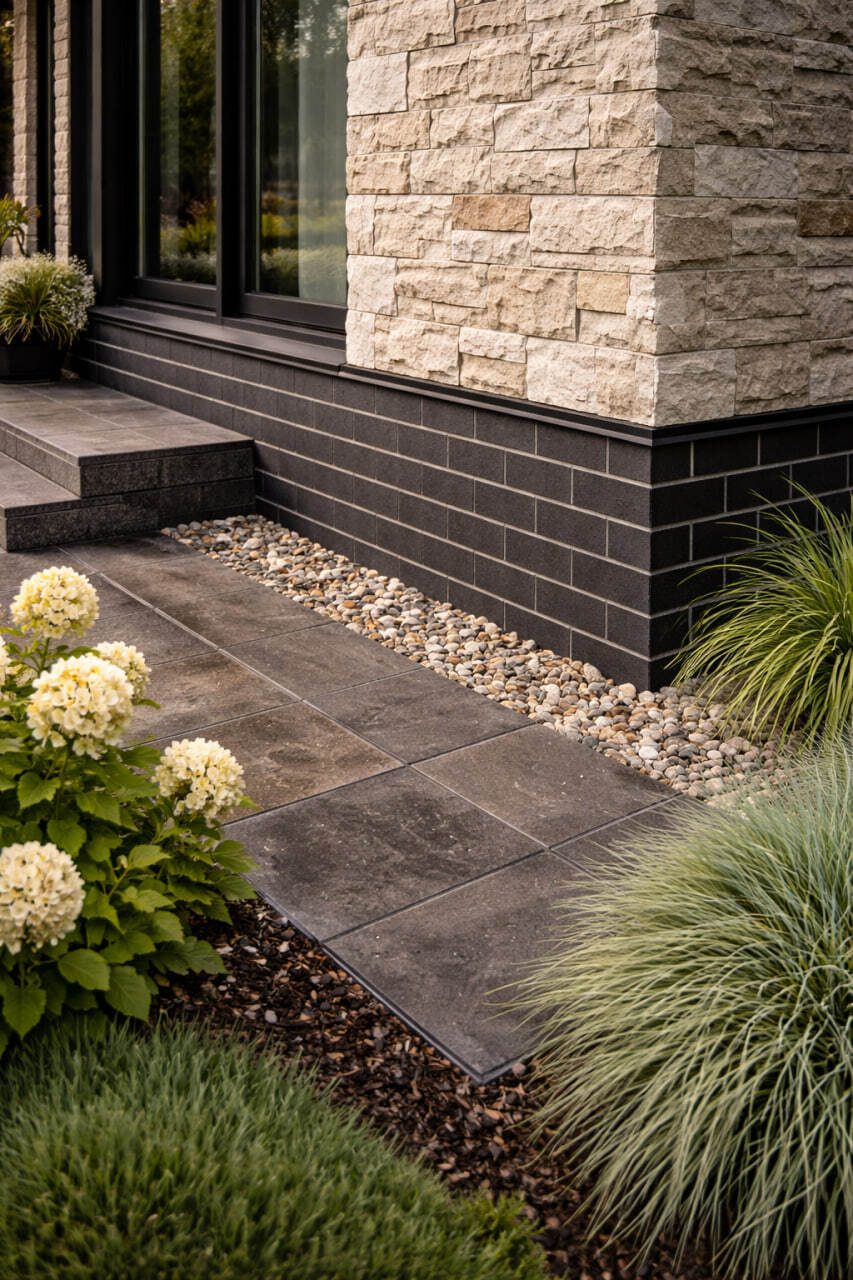
What Are Thermal Bridges and Why They Are Dangerous
Thermal bridges are areas of a building structure where heat escapes most intensively.
They most often appear:
- in the plinth zone
- at the junction of the wall and the foundation
- near the blind area
- at insulation joints
Consequences of thermal bridges:
- freezing of the lower part of the walls
- cold floors inside the house
- condensation and dampness
- mold in corners
- increased heating costs
In practice, up to 15–20% of heat loss can come from a poorly insulated plinth.
Why the Plinth Is the Most Heavily Loaded Part of the Facade
Unlike the main wall, the plinth is constantly exposed to:
- splashing water and dirt
- snow and ice
- salt and chemical de-icers
- mechanical impacts
- temperature fluctuations
- capillary moisture from the ground
That is why solutions that work well on walls often fail in the plinth area.
Plinth Insulation: What Must Be Considered
Proper plinth insulation solves several problems at once:
- eliminates the “cold belt” at the base of the house
- protects the foundation from freezing
- reduces the risk of condensation indoors
- increases overall energy efficiency
Commonly Used Insulation Materials
Most often used for plinth insulation:
- XPS (extruded polystyrene foam) — moisture-resistant and durable
- high-density EPS — with additional protection
Important: the insulation must resist moisture and mechanical pressure.
Why Standard Plaster Is a Poor Solution for the Plinth
A common mistake is finishing the plinth the same way as the wall — using plaster only.
In practice, this leads to:
- cracking
- delamination
- rapid contamination
- moisture penetration into insulation
- frequent repairs
The plinth requires protective cladding, not just a decorative layer.
KORDEKO Flexible Tile as Plinth Protection
KORDEKO flexible tile is ideal for plinth zones because it:
- resists moisture and frost
- withstands impacts and abrasion
- does not crack due to thermal movement
- tightly protects the insulation layer
- requires minimal maintenance
Textures especially suitable for plinths:
- ROCK STONE (dark shades)
- SLATE
- BRICK
Typical Plinth System with Insulation and Cladding
Correct construction sequence:
- Foundation / wall
- Waterproofing
- Insulation (XPS or high-density EPS)
- Reinforcing layer with fiberglass mesh
- Primer
- KORDEKO flexible tile
❗ This system protects the plinth from cold, moisture, and mechanical damage.
How the Plinth Affects Indoor Comfort
After proper plinth insulation and cladding:
- floors become noticeably warmer
- cold zones at the base of walls disappear
- indoor humidity decreases
- mold risk is reduced
- the house retains heat longer in winter
This is especially noticeable in houses with basements or semi-basement floors.
Common Plinth Construction Mistakes
- No insulation
- Using unsuitable insulation materials
- Poor moisture protection
- Plaster without cladding
- Interrupted insulation between wall and plinth
All these mistakes create thermal bridges and lead to expensive repairs later.
Why KORDEKO Solutions Are Chosen
KORDEKO facade materials:
- are suitable for plinth applications
- are lightweight and do not overload structures
- provide airtight protection for insulation
- are resistant to Eastern and Western European climates
- are proven in private and commercial projects
The plinth is a key facade zone that directly affects warmth, comfort, and the durability of the entire building.
The right solution:
- plinth insulation
- moisture protection
- durable cladding with flexible tile
eliminates thermal bridges and preserves facade energy efficiency for decades.
KORDEKO Contacts
📱 Phone: +37368140333
🌐 Website: www.kordeko.com
📧 Email: kordeko.md@gmail.com