A lightweight, long-lasting facade system that follows complex shapes and protects insulation — without cracks, without heavy substructures, and without constant repairs.
What does a “flexible facade” mean, and why has it become a trend?
A flexible facade is an approach to cladding where the finishing material doesn’t “fight” the system — it works together with the wall and insulation: it handles micro-movements, thermal expansion, and moisture, keeping a clean look for years.
In real conditions, a facade is constantly under stress:
- frost/heat and temperature swings
- building settlement
- vibrations and wind loads
- moisture, rain, snow
- impacts and mechanical damage (especially on the plinth/base)
If the finish is rigid and heavy, cracks, delamination, and leaks appear. That’s why a flexible facade is considered a more practical solution for private homes and commercial buildings.
KORDEKO flexible tile (PletaFlex) as the foundation of a flexible facade
KORDEKO’s facade material based on PletaFlex technology is designed to be:
- lightweight (doesn’t overload walls or insulation)
- elastic (doesn’t crack under micro-movements)
- resistant to moisture and frost
- UV-stable (color holds in the sun)
- easy to install within a facade system
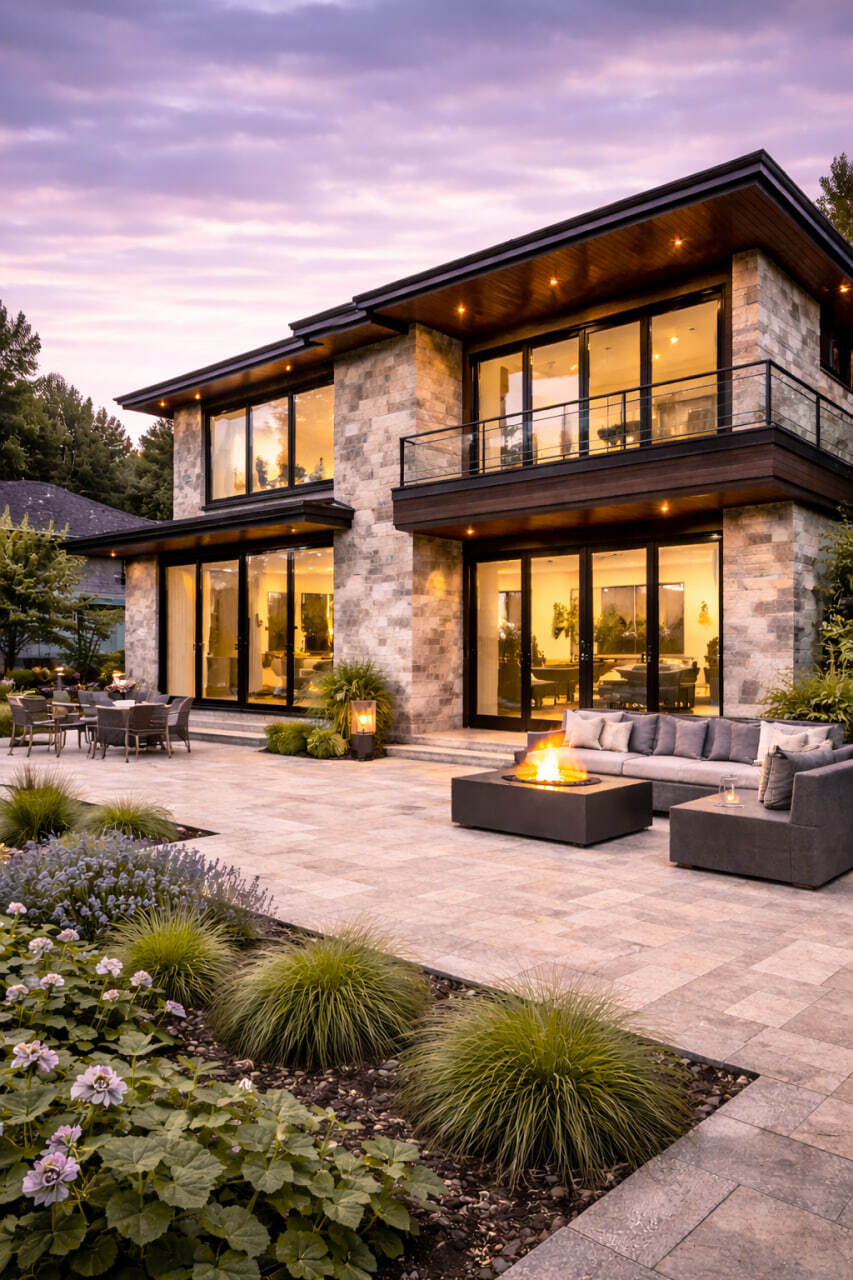
Visually it looks like natural stone / brick / slate / wood, but in behavior it’s a modern, high-tech cladding.
Where a “flexible facade” wins the most
1) Insulated facades (EPS / mineral wool)
Typical “layer cake”:
- Load-bearing wall
- Adhesive
- Insulation
- Dowels
- Reinforcement layer (adhesive + mesh)
- Primer
- KORDEKO flexible tile (PletaFlex)
Plus: no heavy substructures or extra fasteners that often create thermal bridges.
2) Complex architecture: curves, arches, bay windows, columns
Where natural stone requires cutting, frames, and reinforcements, flexible cladding follows the shape neatly without overloading the structure.
3) Renovation of older houses
When walls are “tired,” heavy materials are risky. A flexible facade helps refresh the look and insulate the house without extra load.
4) Plinth/base and entrance zones
Dirt, splashes, impacts — flexible tile protects and keeps a neat appearance, especially in darker “stone” textures.
Practical advantages of a flexible facade
- fewer cracks in the finishing layer
- faster installation compared to stone and brick
- lightweight — safer for insulated systems
- minimal maintenance — periodic washing is usually enough
- long-lasting appearance without constant repainting
- a beautiful “stone-like” facade without complex work
Common mistakes that “kill” the facade (and how to avoid them)
Mistake: Installing over a weak/dusty substrate
How to avoid: The substrate must be solid, dry, reinforced, and primed
Mistake: Working in the wrong temperature conditions
How to avoid: Follow adhesive recommendations; avoid rain/frost/extreme heat without protection
Mistake: Uneven adhesive layer and poor rolling/pressing
How to avoid: Apply evenly with a notched trowel and press the tile firmly
A flexible facade is a modern building logic: the facade should be beautiful, warm, and durable — not “capricious” and expensive to maintain.
With KORDEKO (PletaFlex) you get cladding that:
- works on an insulated system
- follows complex shapes
- protects the facade from moisture and climate stress
- keeps its appearance for years
KORDEKO Contacts
📱 Phone: +37368140333
🌐 Website: www.kordeko.com
📧 Email: kordeko.md@gmail.com