
The plinth is the most “punished” part of the facade. This is where splashes from pathways hit, dust settles, snow and de-icing agents accumulate in winter, and streaks appear in spring. If you choose the wrong height or material, the lower part of the house will almost always look dirty — even on a well-maintained property.
Below is a practical guide: what height to choose, which materials work better, and which mistakes lead to “constant dirt.”
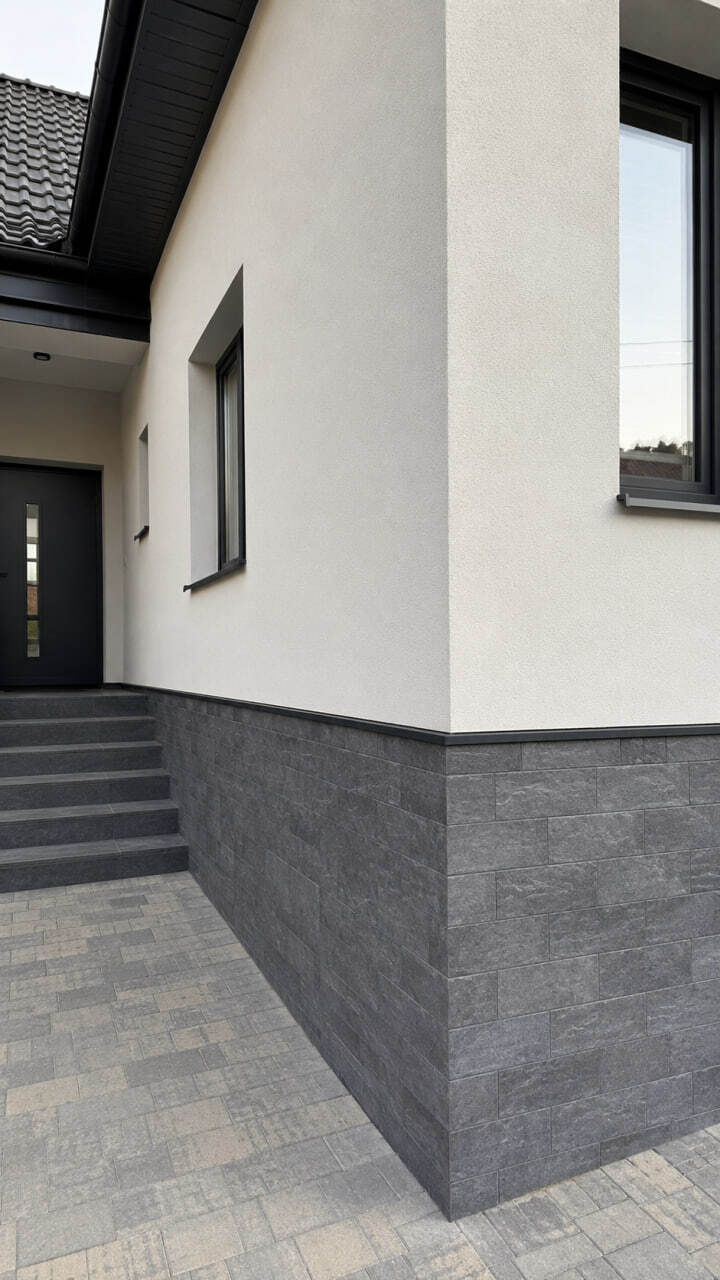
Why the plinth gets dirty more than any other part of the facade
The plinth catches everything that happens at ground level:
- splashes after rain and pathway cleaning
- dirt from wheels and footwear
- wet snow and meltwater
- mechanical contact from shovels, bicycles, and tools
That is why the plinth should not only be “beautiful,” but also practical.
How to choose the right plinth height
Factor 1: splashes from the ground
If there is a pathway or parking area nearby, splashes rise higher than they may seem. In such cases, a low plinth quickly ends with a dirty strip above the finish.
Factor 2: snow in winter
If snowdrifts and snow buildup are common, the plinth should cover the area where snow rests and melts against the wall.
Factor 3: terrain and the “blind area”
The closer the ground is to the wall and the worse the water drainage, the higher the protective plinth zone should be.
Practical rule: it is better to make the plinth slightly higher than to later look at a dirty strip on the main wall.
Which material to choose for the plinth so it does not look “tired”
1) Texture matters more than smoothness
Smooth surfaces show streaks and stains more clearly. Textured materials hide everyday marks better and look cleaner in real use.
2) Medium shades are more practical than extremes
A white base near the ground quickly loses its appearance. A very dark base can look beautiful, but light dust becomes visible on it. Stone-like, grey-beige, and natural shades usually work best.
3) Maintenance should be simple
The plinth will still need occasional washing. That is why the material should handle cleaning well and should not require constant “refreshing.”
The most common mistake: making the plinth the same as the wall
When the plinth is finished with the same material and color as the main facade:
- dirt visually “moves” higher
- the house starts looking tired after just one season
- cleaning and repainting are needed more often
It is much more practical to separate the plinth as an independent protective zone.
Details that solve everything: water must move away from the wall
Even the best material will not help if water constantly remains near the house. For the plinth, the following are critical:
- proper slope away from the building
- functional drip edges and junctions
- no “shelves” where water can collect
If the plinth is constantly getting wet, water management must be solved first — and only then the finishing material.
How to make the plinth reliable from a technical point of view
For the lower part of the facade to stay strong and not start crumbling, the base matters:
- a solid and even substrate
- primer applied according to the technology
- adhesive suitable for exterior use and operating conditions
- neat transitions at corners and junctions
In projects where the facade is built as a system, it is especially important that Facade insulation is connected to the plinth with proper technical details; otherwise, problems most often appear from the bottom.
Why “stone” is often chosen as a protective layer for the plinth
Stone texture on the plinth solves two tasks:
- it makes the lower part look visually solid and premium
- it helps hide everyday wear and dirt
That is why KORDEKO Flexible Tile (PletaFlex) is often used as a practical solution for the lower part of the house — when a neat look, easy maintenance, and convenience on corners and transitions are needed.
Conclusion
A trouble-free plinth is a combination of three things:
- the right height, to cover splashes and snow
- a practical texture and shade, to avoid constant dirt
- proper technical details and water drainage, so the lower part does not stay wet
If this is done correctly from the beginning, the facade will look well-maintained not only “after washing,” but every day.
KORDEKO Contacts
📱 Phone: +37368140333
🌐 Website: www.kordeko.com
📧 Email: kordeko.md@gmail.com