
After winter, a facade may look “generally fine,” but small issues are better caught early. If ignored, by summer they can turn into stains, cracks, and peeling areas. This checklist will help you inspect the house yourself and carry out simple minor repairs without calling a crew.
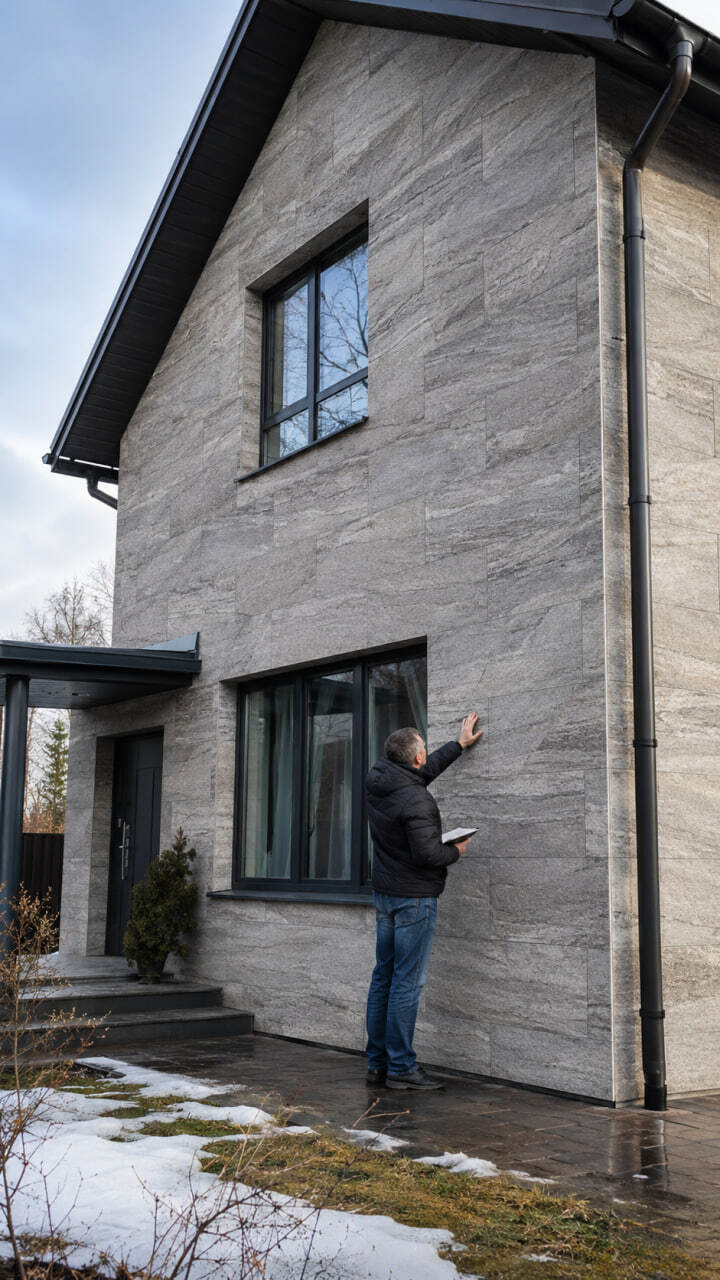
What to Prepare (10 Minutes)
- flashlight
- masking tape and marker to mark problem areas
- thin screwdriver or spatula to check weak zones
- bucket of water or hose to test water runoff
- cloth/brush to quickly remove dirt and see the defect clearly
1) Quick Walk Around the House: Where to Look for the First Signs
First, simply walk around the house and mark with tape:
- new cracks, especially near corners and windows
- water stains under cornices and drip edges
- dirty areas on the plinth
- areas where the finish looks swollen or has a different tone
2) Plinth and Lower Facade: The Most Problematic Zone
Look for:
- chips, scratches, traces from snow or shovels
- white deposits, possible efflorescence
- places where water or snow stayed for a long time
If the lower part is constantly getting wet, the problem is usually in the junctions and water drainage, not just in “cosmetics.”
3) Corners and Joints: Where Cracks Appear First
Check:
- external corners of the house
- transitions between different materials
- areas near the entrance and steps
Even a small crack is a signal that the junction is not working properly or that there is micro-movement there.
4) Windows, Reveals, Window Sills, and Drip Edges
Inspect:
- corners of openings, especially cracks spreading like “rays”
- joints between the reveal and the frame
- sealant under the drip edge
- any gaps where water can enter
If water gets behind the drip edge, stains and layer damage may appear in spring.
5) Cornices, Canopies, and Protruding Elements
Check:
- whether there are “shelves” where water was standing
- whether the edge is coming loose
- whether there are stains running down the wall
A simple test helps here: carefully pour water from above and see where it flows.
6) Hollow-Sounding and Weak Areas
Tap the facade in several spots.
A dull sound, vibration, or the feeling of emptiness is a sign of delamination. Such areas should not simply be “covered over”; first, the cause should be understood — moisture, weak substrate, or an incorrect junction.
7) What You Can Do Yourself Without a Crew
Light Cleaning — the Most Common “Repair”
- wash off dust and road dirt
- remove local stains with a soft brush
After washing, the facade often looks 30% fresher.
Renew Sealant at Local Junctions
If the sealant near a drip edge or canopy has cracked, renew it locally. Important: apply it only on a dry and clean surface.
Touch Up Small Chips, If You Have a Painted Area
Only if there is no delamination and the surface is solid.
8) What Is Better NOT to Do Yourself
- cover cracks “from above” without checking whether they are active
- glue anything onto a damp wall
- cover a problematic junction without correcting the water drainage
This almost always leads to the same problem returning after one season.
9) How to Avoid Repeated Problems on the Finish
If the house is insulated, after winter it is especially important that all junctions are done properly and do not let water in. That is why Facade Insulation should be controlled as a full system: junctions, corners, drip edges, canopies, and the plinth.
And in risk zones — plinth, entrance area, and wall sections between openings — KORDEKO Flexible Tile (PletaFlex) is often chosen as a practical cladding that is easier to keep neat and clean.
10) Mini Checklist: Inspection Summary
Take a photo and save it.
- cracks near windows and corners: yes/no
- stains under drip edges and cornices: yes/no
- plinth is wet or dry
- sealant is intact or cracked
- hollow-sounding areas: yes/no
- water flows away from the facade or stays near the wall
KORDEKO Contacts
📱 Phone: +37368140333
🌐 Website: www.kordeko.com
📧 Email: kordeko.md@gmail.com