
A house surrounded by greenery looks beautiful, but this location also has a downside: the facade stays damp longer, dries more slowly after rain, and becomes covered with green deposits faster. Most often, this is not just “dirt” but a biofilm — algae and moss that thrive in shade, moisture, and on textured surfaces.
Below is a practical plan to reduce the risk of green buildup and make the facade easier to maintain.
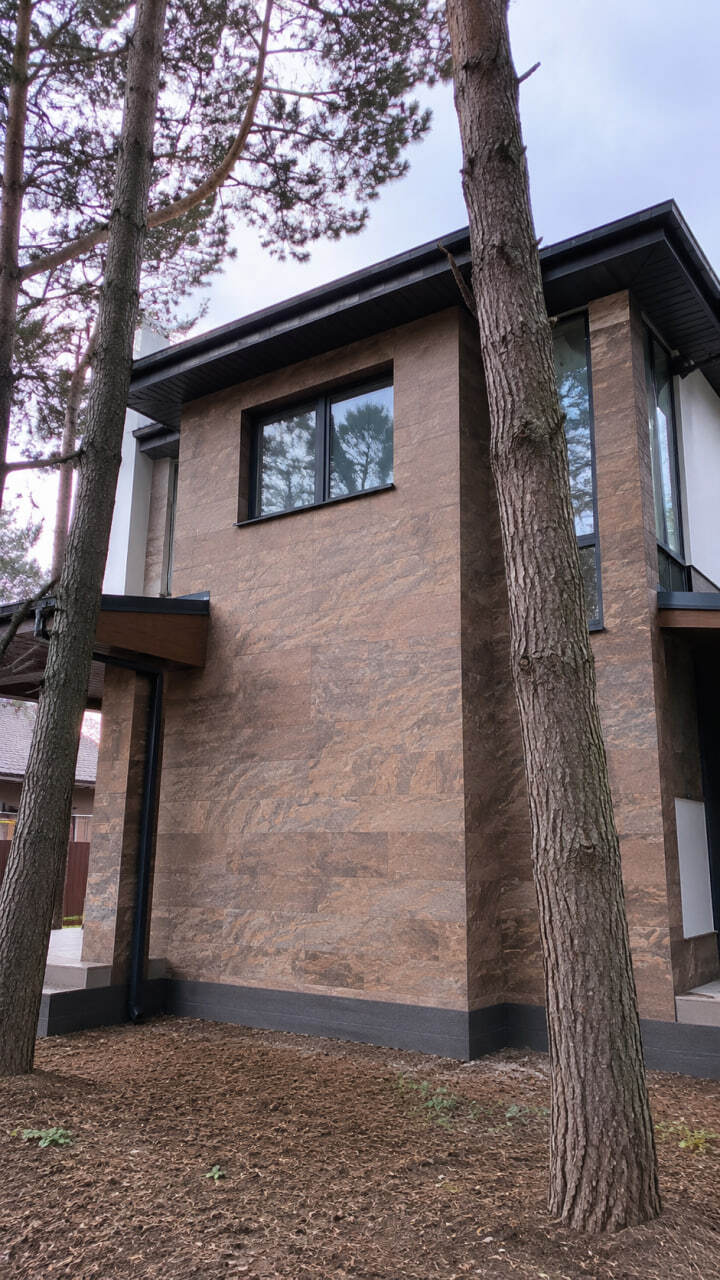
Why facades turn green faster near trees
The main reasons are usually the same:
- shade from tree crowns: the sun does not “dry” the wall properly
- increased air humidity near foliage
- raindrops and splashes remain on the surface longer
- poor water drainage: water streaks on the wall, wet plinth
- buildup attaches more easily in places with constant moisture: corners, lower areas, zones near gutters
Where green buildup appears first
Check these areas — this is where the problem usually starts:
- north and north-west sides
- lower facade and plinth area: splashes + dirt
- areas under cornices where water “moves” along the surface
- places near downpipes and drains
- corners, window reveals, joints and connections where moisture is often retained
7 steps that really reduce green buildup
1) Water must move away from the wall
If the area near the facade is constantly wet, no finishing material will fully solve the problem. It is important to have:
- slope away from the house
- properly functioning gutters
- flashings and drip edges so water does not run down the wall
2) Do not create a “wet” plinth
The lower part of the facade should be practical and easy to clean. If the plinth constantly catches splashes, green buildup appears there first.
3) Remove “constant moisture points”
Sometimes buildup appears locally because of small issues:
- water dripping from an air conditioner
- leaking gutter
- poor drainage from a canopy
- a gap in a joint or connection
4) Washing and prevention are better than waiting until it turns green
Gentle seasonal facade washing often solves the problem at an early stage. The sooner biofilm is removed, the less chance it has to become firmly attached.
5) Choose a practical texture and shade
Very light and perfectly smooth surfaces show water streaks and buildup faster. In a “green zone”, it is usually more practical to choose:
- medium stone shades
- a texture that still looks neat after rain
6) Proper substrate preparation is more important than “antiseptic treatment”
If the finish is applied over a weak substrate or without primer, microcracks and weak zones can appear, where moisture remains longer. That is why, before installation, a solid even base, primer, and the correct adhesive are important — they reduce the risk of defects where green buildup may later appear.
7) Think about a “dry” wall, not only about appearance
If the wall is cold, it collects condensation more often and dries more slowly. In such cases, Facade insulation can help, because a warmer exterior wall usually creates fewer damp zones.
Which finish makes maintenance easier near trees
In shaded and humid conditions, two things matter: easy maintenance and a stable appearance. That is why, for such facades, people choose solutions that can be maintained easily and that work well around joints and plinth areas — for example, KORDEKO Flexible Tile (PletaFlex) as a practical stone-effect cladding for areas where the facade gets wet and dirty more often.
Conclusion
To prevent a facade near trees from turning green, the solution is not “stronger chemicals”, but the right approach:
- remove the causes of constant moisture
- protect the lower facade and key joints
- choose a practical finish and maintain it regularly
This way, the facade will look neat even in shade and damp conditions.
KORDEKO Contacts
📱 Phone: +37368140333
🌐 Website: www.kordeko.com
📧 Email: kordeko.md@gmail.com