
Stains on a facade almost always start not with the finishing material, but with water. If the storm drainage system and gutters do not work properly, the facade will get wet even with a perfect material: dark streaks, dirty marks, efflorescence, and a “tired” lower part will appear. That is why, for a beautiful facade, the most important thing is very simple — where the water actually goes after rain.
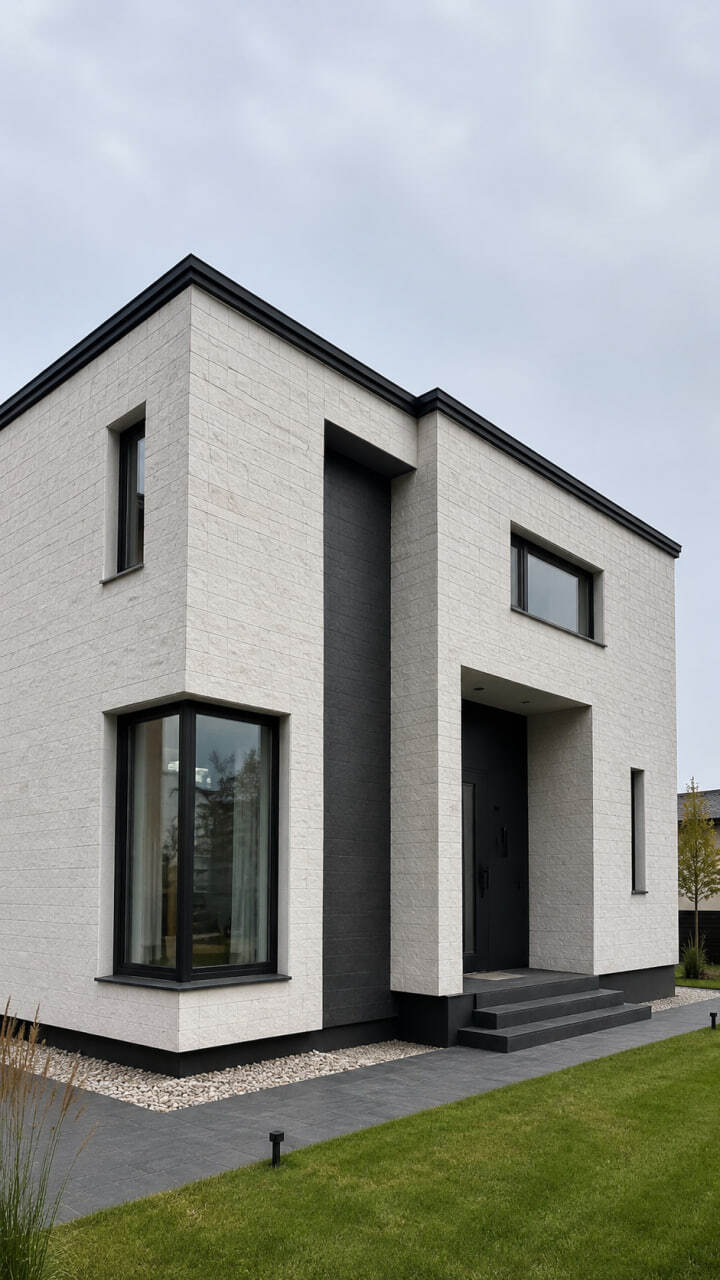
Why a “wet facade” is almost always a drainage problem
The scenario is usually the same:
- water from the roof flows in the wrong direction or hits the wall directly
- gutter joints leak
- water overflows from the gutter onto the facade
- the lower part of the wall stays wet because water is not properly drained away from the house
And if the facade gets wet regularly, it becomes dirty faster and visually ages sooner.
7 places where mistakes are most common
1) Gutter overflow at corners and during heavy rain
If the gutter or outlet does not have enough capacity, water “jumps” over the edge and runs straight down the facade. The result is streaks on the corners and dirty vertical marks.
2) Incorrect joints and seals
A leak in a pipe or elbow connection creates a constant thin stream — exactly the kind of water flow that leaves the most visible stains on the wall.
3) Drainpipe outlet is too short
When water from the pipe falls right next to the plinth, it splashes onto the wall and wets the lower part. Then come dirt, efflorescence, and a “permanently wet zone.”
4) No proper water drainage away from the house
If water goes into the ground right next to the wall, the facade will get wet from below: splashes, moisture, and a dirty plinth.
5) No drip edge on cornices or canopies
Without a drip edge, water “sticks” to the edge and runs down the facade. Even a small canopy can cause streaks if the water does not detach from the edge.
6) Mistakes around windows and sills
If the sill is installed without the correct slope or there are gaps at the joints, water can get under the finishing layer and later appear as stains and marks.
7) Storm drainage is not connected with paths and site slope
If the path or land slopes toward the house, water will still affect the plinth, even if the gutter system itself is perfect.
How to do it correctly: the simple principle “water must not touch the wall”
The working logic is simple:
- water from the roof enters the gutter and goes into the pipe without overflowing
- the pipe directs water into a storm drain, channel, or collector — not into the ground near the wall
- there is a slope away from the house so water moves away from the plinth
- drip edges are installed on projections and canopies so water separates from the edge
If the facade includes insulation, water is twice as dangerous
When Facade Insulation is installed, protection against moisture becomes critical: wet zones create problems around joints faster, the appearance deteriorates, and the system loses stability. That is why storm drainage and gutters must be planned before the final facade finish, not after.
Which finish helps keep the facade looking neat for longer
Even with proper storm drainage, the facade will still face dust, splashes, and seasonal marks. That is why the surface should be practical to maintain and should not require constant “refreshing.”
For such tasks, KORDEKO Flexible Tile (PletaFlex) is often chosen, especially for the plinth area and entrance zone — places exposed to more splashes, dirt, and regular cleaning.
Mini checklist for inspecting storm drainage after rain
- are there any gutter overflows?
- is water dripping from any pipe joints?
- does water hit the facade directly?
- does the plinth or lower wall get wet?
- where does the water go at the base of the house — into a storm drain or “under the wall”?
- are there stains under window sills and canopies?
If the answer to any question is “yes,” this is a potential source of facade problems.
KORDEKO Contacts
📱 Phone: +37368140333
🌐 Website: www.kordeko.com
📧 Email: kordeko.md@gmail.com